

Hometown Heroes
What Held When Everything Froze


It’s important to note that this article has absolutely nothing to do with my journey of Becoming Episcopalian. This article is about the human kindness I have witnessed the last few days. There are still good people out there, and I think we should all take a moment to thank them for their love of others.
The ice storm that swept through Mississippi over the last few days didn’t need a name to make itself known. You could hear it in the quiet. Roads empty. Power out. Trees bent low under the weight of ice until they finally gave way—cracking, snapping, falling across yards, homes, and power lines.
For a lot of folks, the waiting has been the hardest part. Waiting for electricity to come back on. Waiting for roads to clear. Waiting for linemen who are stretched thin and working around the clock, often far from their own families, trying to restore some sense of normal.
For some people, without power or any other way to know what was coming, all they could do was sit on their phones and watch Mississippi’s favorite son, Matt Laubhan. Our steady, trusted weatherman, sharing story after story of how the ice was affecting everyone—north to south, city streets to back roads. He warned that more ice was on the way, that freezing temperatures and sleet weren’t finished with us yet, and he did what he’s always done: stayed calm, stayed present, and kept people informed. In moments like this, that matters. Sometimes reassurance comes in the form of a familiar voice, doing their job well, making sure no one feels completely in the dark.
While that waiting went on, something else was happening too.
Regular people were showing up.
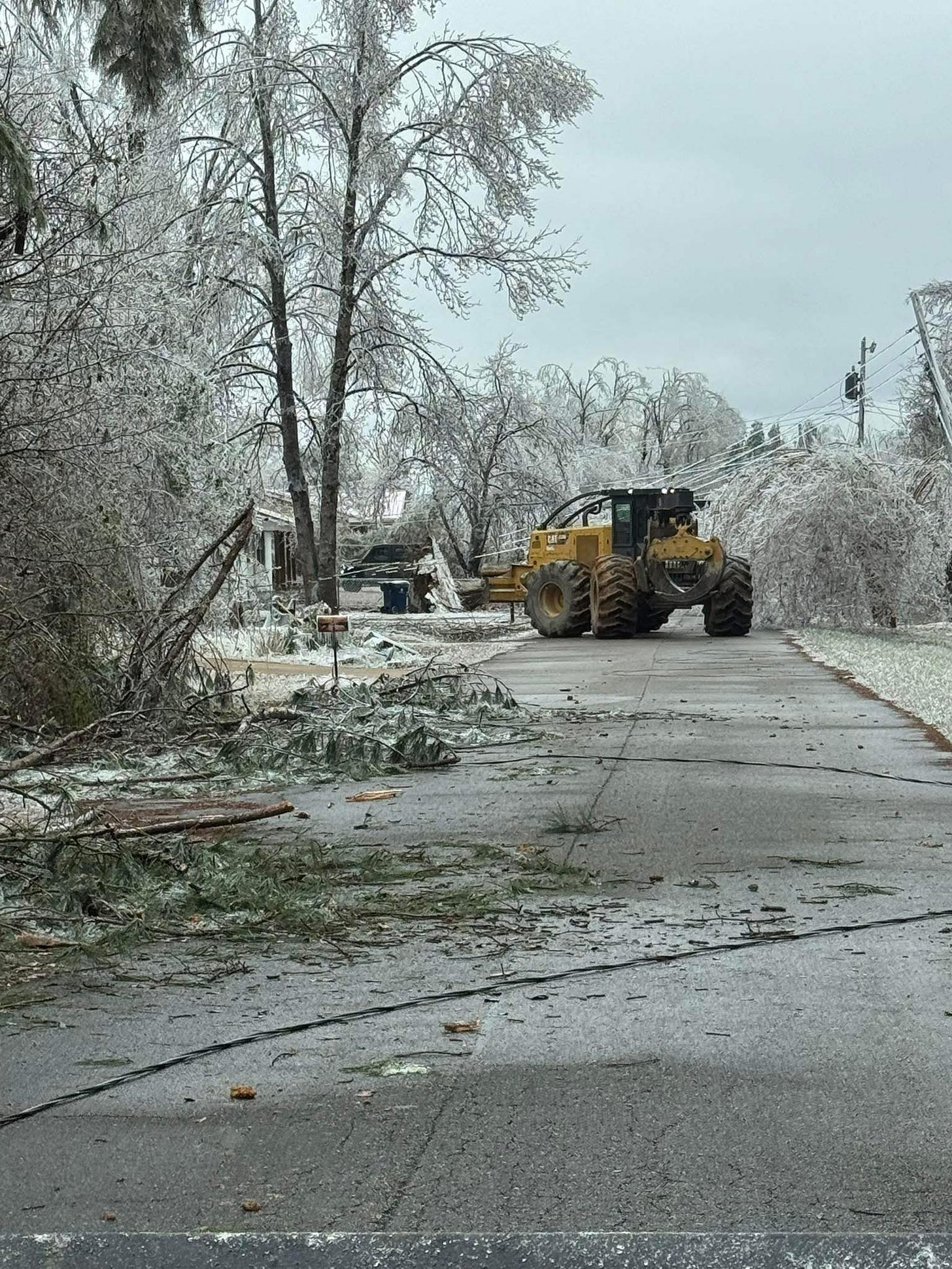
In Booneville, AGL Logging Company rolled out heavy equipment—not for a contract, not for recognition—but to clear trees from roadways so people could get where they needed to go. That kind of machinery doesn’t move easily, and it doesn’t run cheaply. They did it anyway.
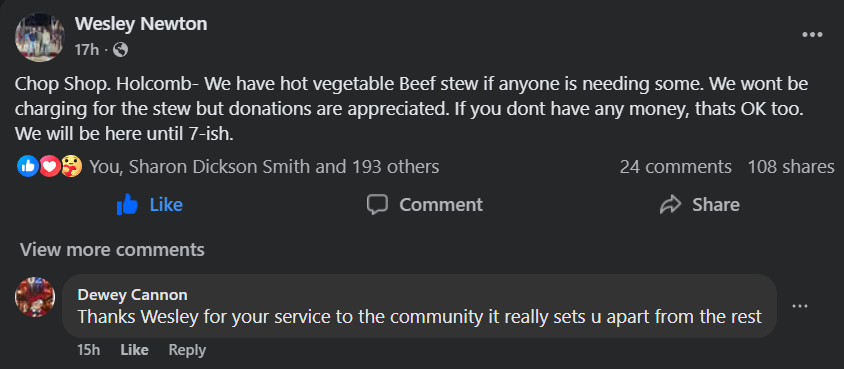
In Holcomb, Wesley Newton at the Chop Shop opened his doors in the middle of all this. Generators. Food. Water. Heat. And hot vegetable beef stew—free. No questions asked. Just neighbors feeding neighbors because cold doesn’t care who you are, and kindness shouldn’t either.
In my parents’ neighborhood, Ben Brown looked at the fallen trees blocking the only exit road and didn’t wait for someone else to handle it. He fired up his tractor and cleared the way. Because of that, a single mom and her kids were able to get out—able to reach the highway instead of being stranded. That’s not a small thing. That’s safety. That’s care. That’s someone deciding that their time and equipment were meant to be shared.
In Grenada, Shane Brown at the warming shelter spent hours scrolling social media, searching for more cots and mattresses so more people could sleep somewhere warm through the night. Not glamorous work. Just necessary work. The kind that keeps people safe when temperatures drop and options run out.
And it didn’t stop there.
Families took in elderly parents so they wouldn’t be alone in the cold. People brought in stray animals—dogs, cats, whatever showed up—because warmth and food shouldn’t be conditional. Folks checked on neighbors they hadn’t talked to in years. Shared extension cords. Shared meals. Shared silence.
These aren’t headlines. They won’t trend. There’s no press release for this kind of thing.
But these are hometown heroes.
This is what preparedness looks like when it isn’t written into a plan or formalized into a system. It’s people paying attention. People noticing what’s needed and stepping in, even when it’s dangerous, inconvenient, or uncomfortable.
Mississippi has taken a beating from this storm. Trees will be cleared. Power will come back. Repairs will be made. But what will stick with me is this: when everything iced over and systems strained, people filled the gaps.
They didn’t ask what they’d get back.
They just did what was good and right.