

Laminated Courage
A Communion Story


For weeks, I stayed seated.
Communion time would come and everyone would rise together, moving in quiet sync toward the rail. They knew what to do. They went. They received.
And I watched.
I told myself I wasn’t ready. That I didn’t deserve it. That there were rules I didn’t understand and some invisible bar I hadn’t cleared. So, I stayed put, hands folded in my lap, letting the line pass by.
It felt safer to observe than to participate.
I had lived a long time believing I wasn’t eligible for communion because I live in a same-sex relationship.
Not because anyone at St. Luke’s Episcopal Church ever told me that.
It was older than this place. Older than this season of my life. Something I carried quietly, like a rule I assumed everyone knew.
My mother had told me on several occasions that this was just how it worked in our family’s faith with the Church of God. Catholics had told me the same.
No sacraments for me.
No communion with God.
Same-sex loving. Abomination.
Of course, they’d follow that up with “don’t let that stop you from going to church!” (even though you can’t actively participate in any volunteer positions, sacraments or ministries… don’t forget to tip your pastor pay tithes!)
Nobody ever said it meanly. Just matter-of-fact. Like a weather report. Like something settled.
And when something is said that plainly, you don’t argue with it. You absorb it.
I believed it too.
The thought of walking to the rail scared the hell out of me — not in a dramatic way, but in a quiet, tightening-in-the-chest way. I hadn’t taken communion since I was a youth, for a couple of years shortly after my baptism. Back when I still fit inside expectations. Back when I was eligible.
So, sitting there in the pews, inside St. Luke’s, I wasn’t deciding whether to take communion.
I was standing at the edge of everything I’d been taught about who gets to belong.
Back when I was a kid, communion had always looked different than this.
When I was young, it came out on gold plates — a wafer on top and a tiny plastic cup of Welch’s grape juice beside it. My Pappaw was the preacher. He used Welch’s because it was one of the only juices I wasn’t allergic to.
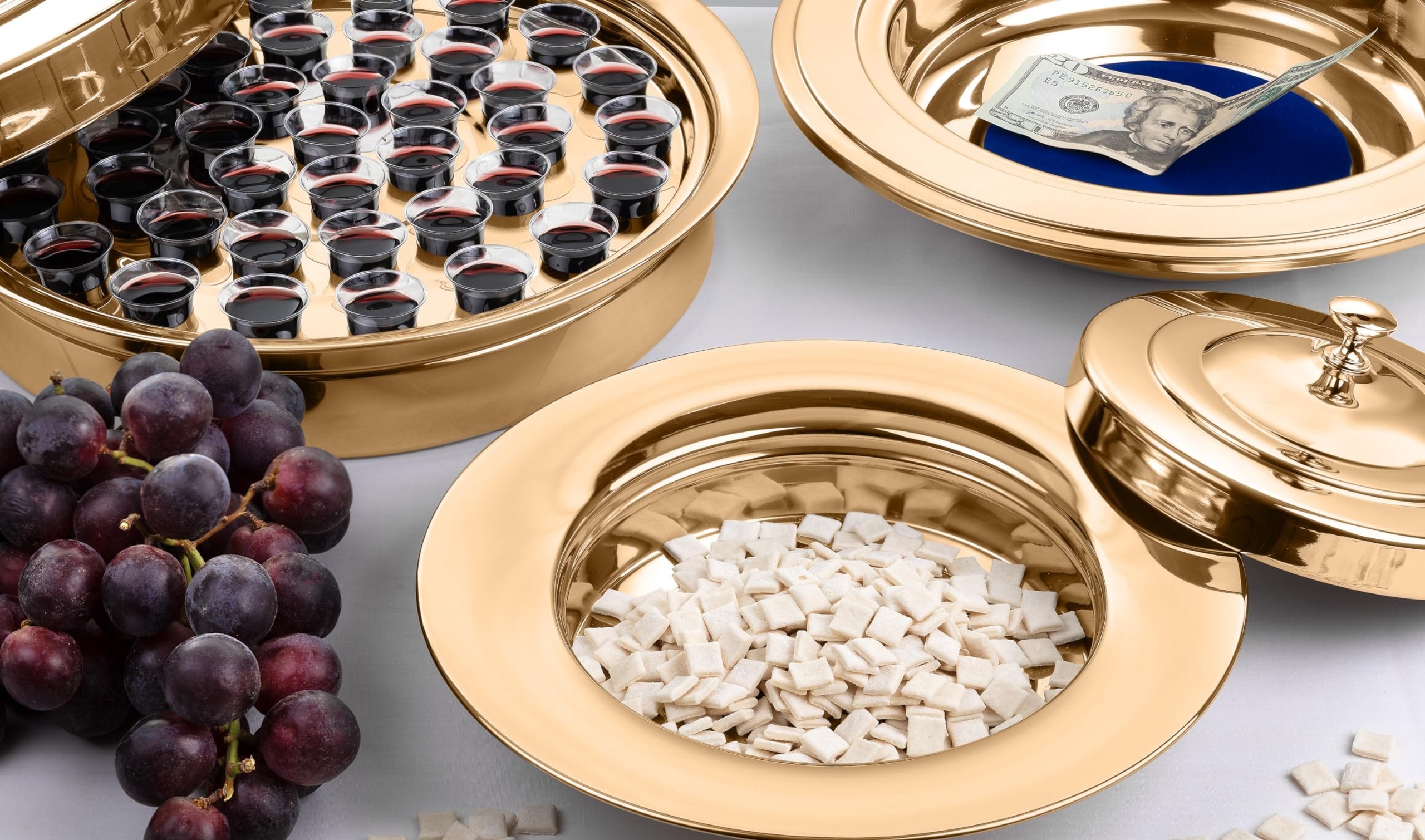
That part mattered. Even back then, someone was quietly making sure I could participate. It hurt when that changed.
But communion also lost some of its reverence for me early in life.
One month, the church’s order of the communion wafers didn’t arrive on time. So, my Mammaw went to Sam’s Club and bought oyster crackers as a substitute.
Only she didn’t realize some of them were garlic and cheese flavored.
The grandkids laughed endlessly as we helped prepare the communion plates. We ate more than we were supposed to. The sanctuary smelled faintly like soup.
The body of Christ never tasted so good.
Somewhere between gold trays, grape juice, and garlic crackers, communion stopped feeling mysterious and just became a monthly routine.
Which, looking back now, might have been its own kind of grace.
I never took communion as an adult until I came to St. Luke’s and found a new reverence for it.
It was such a different ritual. The breaking of bread. The quiet gravity of it. The way the room seems to hold its breath for a moment.
And how surprised was I to discover there was real wine involved.
Not grape juice in plastic cups. Not something carefully sanitized for children and allergies. Actual wine. Actual bread. A sacrament that felt older than me, older than my fear.
For a while, I thought I might be driving Fr. Nick a little crazy because I wasn’t taking communion.
He was incredibly kind about it. More than once, he reminded me that everyone is welcome to receive, especially since I was already baptized in the Christian faith, even if it wasn’t Episcopalian.
He never pressured me. Never cornered me. Just kept quietly opening the door. An invitation’s to Jesus’s table.
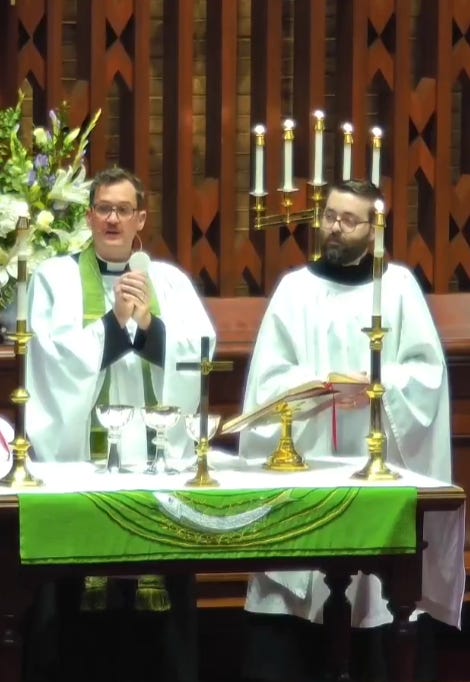
Once, he approached me during communion while I was still sitting in my pew and asked if I’d like to receive.
I almost died. Truly. I felt my spirit leave my body.
All I could think to say was, “I can’t.”
Not I don’t want to.
Not maybe later.
Just — I can’t.
He knew I could.
But I couldn’t.
Because in my bones, I still believed I wasn’t worthy. That it wasn’t okay. That somewhere, some invisible ledger was keeping score.
Brimstone and fire and all that.
I guess he didn’t realize I was having a full moral crisis right there in the pew, because he smiled and said, “Oh — are you gluten free? I can get you a Cheez-It.” (Honestly, this man may have said “Jeez-it;” I would not put it past him.)
Meanwhile, my brain was screaming:
OYSTER CRACKERS.
Look buddy, I was not having a dietary issue.
I was having a spiritual reckoning right there in front of the kids holding the plate of Jesus.
He thought this was about gluten.
I knew it was about belonging.
I got away that day without communion again.
But I knew my time was coming.
Not long after, he asked if I’d be willing to usher.
I said yes like it was the easiest yes in the world.
It wasn’t until I got home that it hit me.
I had just volunteered to help facilitate communion.
Without ever having taken communion.
Apparently, this is how God works with me.
Not with lightning bolts.
Not with ultimatums.
Just quiet invitations I accept before I understand what they mean.
It was Laity Sunday, and suddenly I didn’t have many Sundays left before my ushering started.
I was running out of time to stay comfortably undecided.
Quite frankly, I needed to shit or get off the pot.
And somehow, Amanda Wallingford’s Laity Sunday sermon gave me the courage to do exactly that.
She said, “In order to keep growing, we are supposed to do something that scares us every now and then.”
And sitting there in the pew, I realized I was already living inside the question.
I had said yes to ushering.
I had said yes to showing up.
All that was left was to say yes to the table.
So, I stood up.
I got in line.
I kneeled and held out my hands.
I did not spontaneously combust into flames.
The voice of God did not curse me from above.
I took the bread dipped in wine. I returned to my seat and sat in silence, waiting for whatever consequence I had been taught to expect.
Would I choke?
Nothing happened.
I’ve been taking communion ever since.
And I haven’t died yet.
I took my bulletin from that service and laminated the cover into a bookmark. I keep it tucked inside whatever spiritual formation book I’m reading at the time.
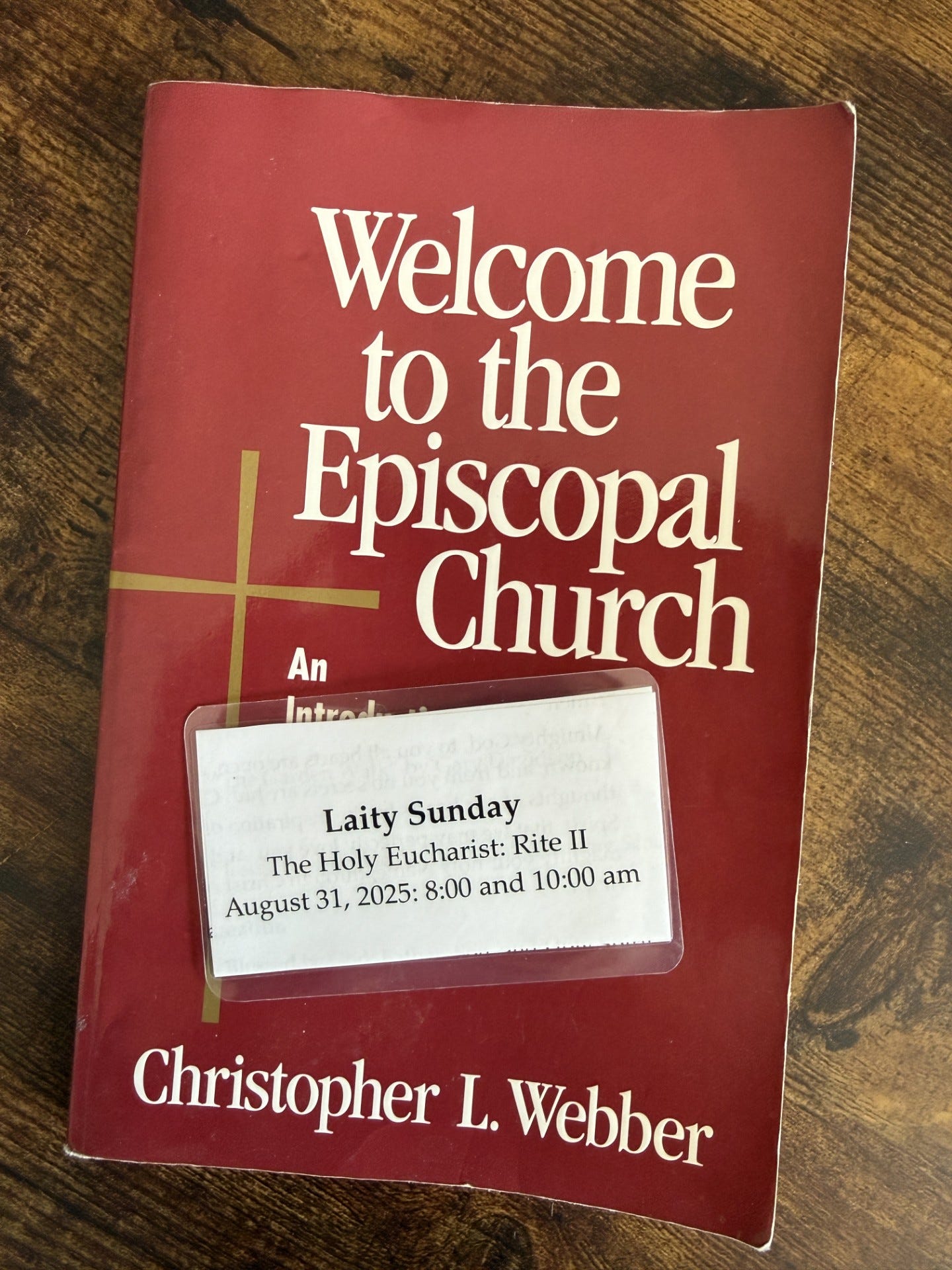
It reminds me that I can do hard and scary things.
That I’m welcome to.
That I’m wanted to.
And now, when I open a book and see that bookmark, I remember:
Courage doesn’t always roar.
Sometimes it’s laminated.
Sometimes it lives between pages.
Sometimes it looks like a quiet yes you carry with you.
And sometimes it looks like realizing you were never disqualified in the first place.
He definitely said “Jeez-it.”